(cringe) processing #3: that summer eleven years ago
Note: I am in the process of archiving my writings disperced across social media platforms on my own website here. This is a mirror post of my personal essay “(cringe) processing #3: that summer eleven years ago" on my Substack page (cringe) processing.
On the recommendation of a friend, I started to read Designing Your Life by Bill Burnett and Dave Evans. Currently at Chapter 2, I am in the process of figuring out my life compass by honestly assessing what has nourished me in work and life.
It recently dawned upon me that the same summer that Xiaohua left this world was the same summer that I have always referenced as the most well-lived time in my life during the past ten years or so. My memory has always separated these events. Only now are they collapsing into the same time-space. I can’t help but wonder how I spent eleven years remembering one season while forgetting what happened inside it.
That summer eleven years ago taught me what kind of work nourishes me. It also taught me what kind of life can sustain me through grief.
It was the summer before junior year in college and I was all excited about living in New York City for my internship. After doing community-based work in San Francisco Chinatown through an Asian American organizing fellowship the previous summer, I thought to explore the possibility of documentary as a path that combined my interest in media and social issues. I managed to get an internship at a documentary studio that produced several documentary series for PBS.
I was extremely fortunate to have a really affordable and comfortable accommodation, staying in a room in a modest Brooklyn house owned by the parents of a college alumnus. In exchange for the low rent, I helped out by walking and feeding their dog regularly, especially when the couple were away for trips. It was my first time living in a house and also my first time dog sitting. There were countless times I had to go home to feed and walk the dog before I could start my evening explorations. There were many times I had to take the subway back home to feed the dog and then go back to work during lunch break without feeding myself. But none of these were issues when you were a broke college student trying to make ends meet while living your best life in an utterly expensive city.
My parents back home in China thought I had secured an undergraduate research position at a hospital to strengthen my future medical school applications. For much of my adolescence, I learned to lie to my parents as a way of protecting myself.
Ironically, my summer internship was not unrelated to the medical field. I worked directly with an associate producer on a feature documentary in development that focused on biomedical research. I immersed myself in research and development, methodically sorting through an archive of books, articles, and interviews to formulate the treatment intellectually and creatively. I even managed to pull out great quotes from extremely long and boring C-SPAN videos.
After the research project stalled, I rotated through fact-checking, asset management, and production work. One day I found myself running around Hudson Yards fetching a particular flavor of chips for Sean Combs—long before his name became synonymous with scandal. It was absurd, and strangely clarifying. What I loved had never been production logistics, despite my deep respect for the people who make that work possible. It was the research itself: disappearing into archives, following ideas wherever they led, and helping shape the intellectual foundation of a story.
I learned that I was able to thrive in the small team environment wherein I was trusted to dive deeply into a wealth of information and shape the foundation of a research-based creative project. A senior producer at the studio encouraged me to pursue graduate school, pointing to the realities of visa sponsorship and the contract-based nature of documentary work. And I did eventually fall in love with not only research but also the intellectual inquiry of film and media in relation to sociopolitical issues.
As I am pivoting away from pursuing tenure-track professor positions, would it be possible for me to return to the very beginning of my path? I have spent the last decade building a career that, in many ways, accidentally recreated what I loved about that internship. If academia is no longer the right container for me, what other containers might hold the same impulses: research, art, care, uriosity, and the desire to make meaning with others?
What I do know is that I keep returning to that summer whenever I try to imagine a life well lived. I guess what I’m really trying to recover here isn’t a career per se. It’s the conditions under which I felt most alive.
I remember attending a special screening of Sean Baker’s Tangerine at the Lincoln Arts Center the night before its official premiere. I remember listening to This American Life on the hot, sticky subway rides and eventually getting hooked on the true crime show Serial. I remember taking the free ferry often to enjoy the ocean breeze and the view of the Statue of Liberty. I remember wearing my one fancy vintage dress to this retro jazz festival on the governor’s island, taking pictures of a grooving couple and their cool tattoos. I remember reading works by Leo Ou-fan Lee and journaling about how the ideal tempo of a day in my life would be “to experience life in the morning and write in the afternoon.” I remember visiting and revisiting DUMBO, Brooklyn Bridge, the High Line, Williamsburg, Astoria, and all over Lower Manhattan.
I was spending a lot of time by myself and with myself, exploring cool artsy places and doing cool artsy things. I was porous to the world around me, but also deeply introspective. Bookstores, coffee shops, independent movie theaters, museums, thrift stores, record stores, community parks, islands, and bodies of water. These continue to be spaces that sustain my creative and spiritual needs. Spending my days in slower paces in the otherwise extremely fast-paced city made for an interesting contrast to people-watch and self-reflect. At the young age of twenty, intentionally existing in these third spaces provided me the space to observe, ponder, and intellectualize, oftentimes simultaneously romanticizing while being judgmental about tiny little actions by strangers.
That summer, however, was not all that rosy. One day in June 2015, my WeChat blew up from a high school friend regarding the news of Xiaohua. I was shocked and in disbelief. What surprised me most wasn’t how devastated I felt, but how quickly I stopped feeling anything at all. In high school, after our friendship dissolved, I intensely dwelled inside my emotions for months. This time, my mind seemed to decide that grief was too dangerous to approach. I went straight into a long phase of denial, emotionally shutting down to protect myself from feeling too hurt. I continued going to work. I rode the subway. I wandered museums. Somewhere underneath, something had quietly frozen.
Thinking back, there were a few days later that summer that I literally just locked myself in my room except for the necessity of eating and using the bathroom. I had no energy to do anything. I didn’t know it then, but it was probably the result of unprocessed grief consuming my body and soul. It was not until months later that I burst out in tears in the embrace of my college roommate and eventually accepted the fact that Xiaohua was gone.
Only recently was I reminded that becoming a BBC documentary producer had once been one of Xiaohua’s dream jobs. I don’t know if this means I should return to documentary.
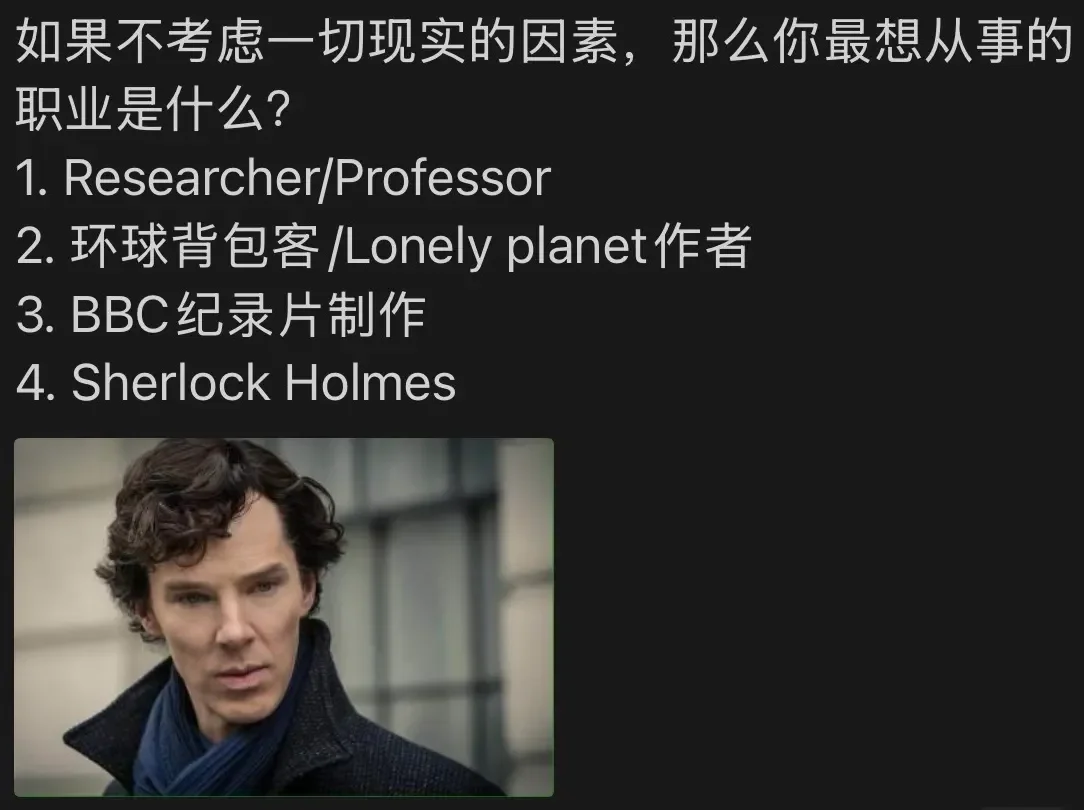
Maybe the point of revisiting that summer is not to turn it into a map, or a sign, or a career plan. Maybe it is simply to notice what has remained true.
I was most alive when I was learning deeply, wandering slowly, making meaning from fragments, and letting the world enter me before trying to write it down. I was also grieving, even when I did not know how to feel it yet. For me, living an intellectually, creatively, and emotionally nourishing life doesn’t require having everything figured out. I simply need to keep learning, exploring, engaging with the world, and allowing myself to feel both growth and loss as they come.
Eleven years later, these memories are no longer separate. The summer I have remembered as my most well-lived was also the summer I learned how much a person could disappear from the world and still remain inside my life.
Now it is time to live the summer of 2026. Perhaps, years from now, memory will return to this summer too.